
01 · Read in context
Matthew 25:14–30 KJV
Open your Bible and read the whole passage before returning to the excerpt.
Supporting Scriptures
- 1 Corinthians 6:19–20 KJV
Morning Glory sermon · Accountability / Stewardship
Responsibility is mine. Ownership is His.
From the moment into the walk
Arriving from a social excerpt? Keep the message connected to its Scripture and carry one faithful response into your life.
These excerpts are released. Each belongs to this teaching; use the Scripture and reflection below to continue.
01 · Read in context
Open your Bible and read the whole passage before returning to the excerpt.
02 · Reflect
Pause with the question. You do not need to submit or share your answer here.
03 · Respond
Read Matthew 25:14–30 KJV and use the learning guide for private reflection. Identify one genuine responsibility, bring it under Christ’s lordship, and take the next faithful step with wisdom.
Saved only in this browser, without account or device sync. View saved items and storage details.
Continue through the teaching record →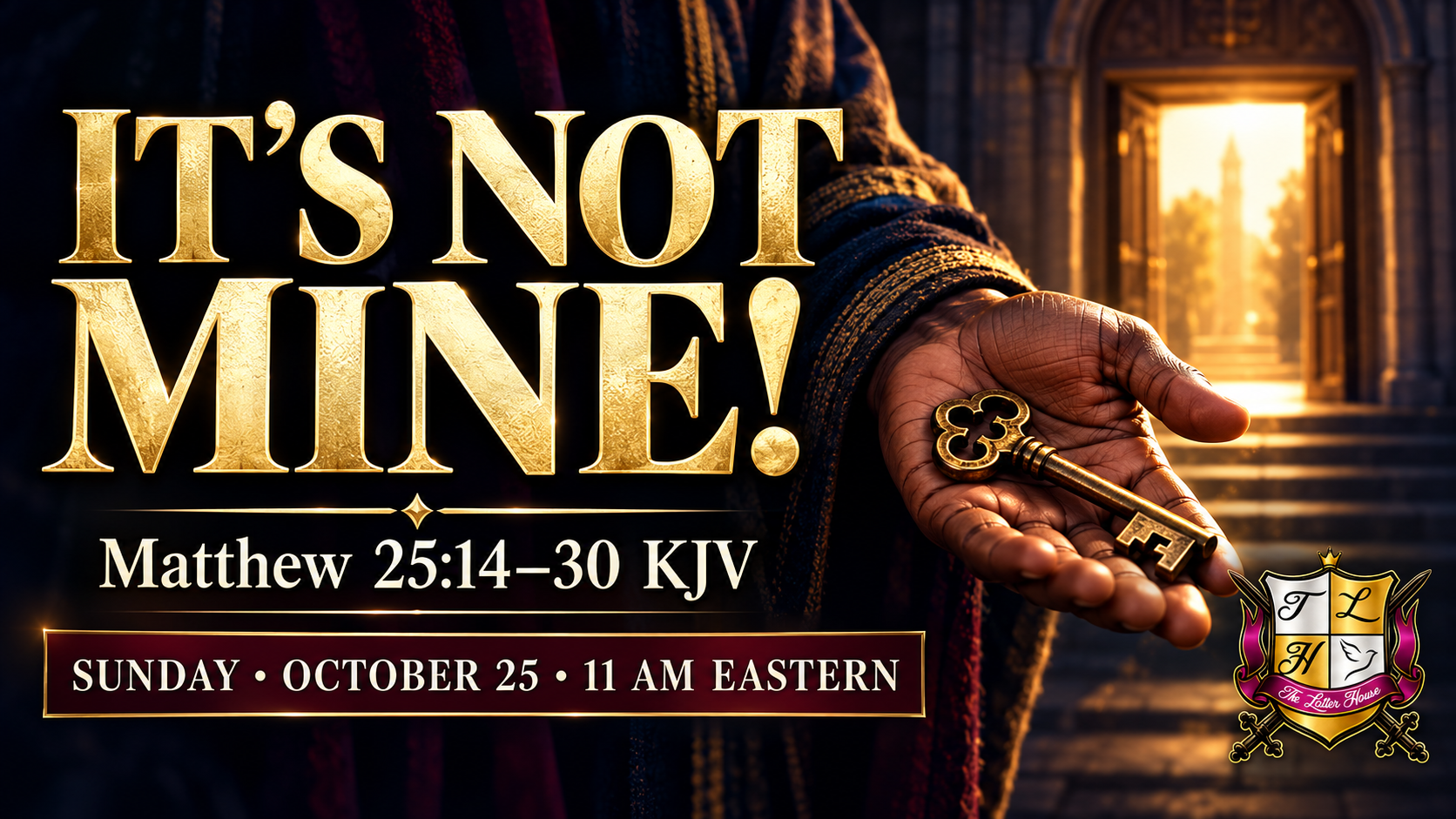
The sermon burden
Responsibility is mine. Ownership is His.
Visitor learning resource
The goods changed hands. They did not change owners. Jesus’ parable calls us to faithful readiness while we await the Master’s return.
Read Matthew 25:14–30 in its setting in Matthew 24–25. A talent here is a substantial sum of money, not directly a modern performance ability. The application reaches our stewardship without turning the parable into a formula for wealth or earning salvation.
Use this visitor adaptation for private reflection and one faithful response. You do not need to disclose personal matters publicly.
Guided study
Matthew 25:14–15 KJV
The master calls his own servants and entrusts his goods to them. Receiving responsibility does not transfer ownership.
A key permits someone to manage a house; it does not give that person the deed. Ask where responsibility has quietly become a demand for control. Bring that area back under Christ’s authority.
Responsibility is mine. Ownership is His.
Matthew 25:15 KJV
Five, two and one are different amounts, yet every servant is entrusted with something substantial. The text does not record the servants complaining about the distribution; comparison is a question the sermon brings to our own hearts.
Do not let another person’s portion make you despise your own. Gratitude and faithful care begin with what was actually placed in your hands.
You do not have to become someone else to take your stewardship seriously.
Matthew 25:16–18 KJV
All three servants act. Two put the entrusted money to work; the third works to bury it. Effort by itself does not establish faithfulness.
Planning, discussion and preparation can serve obedience, but they can also conceal postponement. Examine whether your activity addresses the responsibility or repeatedly circles around it. Not every delay is disobedience; discern the next faithful step with wisdom.
Work on the responsibility rather than building a hiding place around it.
Matthew 25:19 KJV
After a long time, the master returns and reckons with the servants. The servant’s burial does not stop the story or determine its ending.
Neglect can become familiar without becoming right. Do not mistake the absence of immediate confrontation for permission. Return to an honest account of what has been entrusted.
Delayed accountability is not canceled accountability.
Matthew 25:20–23 KJV
The servant with five and the servant with two receive the same commendation for faithfulness and the invitation into their lord’s joy. Their reports begin by acknowledging what the master delivered to them.
The second servant is not rebuked for failing to become the first. Faithfulness does not require pretending to be the source or defeating another steward.
Be accountable for what He placed in your hands.
Matthew 25:24–27 KJV
The third servant describes the master as hard, says he was afraid, and explains that he hid the talent. The description is the servant’s claim; it is not a simple declaration by Jesus that God is cruel.
The master exposes an alternative even within the servant’s own reasoning. An explanation can name why we acted without justifying the decision. Seek wise counsel and courage rather than allowing fear to govern obedience.
Ask whether caution is serving wisdom or concealing avoidance.
Matthew 25:25–30; 1 Corinthians 6:19–20 KJV
The servant knows the money belongs to the master. Returning the original amount does not erase what happened while it was in his care. Correct language about ownership cannot substitute for faithful stewardship.
Jesus’ warning about judgment must be taken seriously, but salvation is not purchased by productivity. Christ died for our sins and rose again. We serve because the risen Lord has redeemed us, and we live in readiness for His return.
Ask both who owns what is in your hands and who owns the hands. Respond through repentance, trust in Christ, humility and one faithful action.
We do not work to buy the Savior’s love; we serve because we belong to Him.
Pause and answer honestly
Practice
Keep the response specific and proportionate. Do not invent obligations, take another person’s assignment, or confuse recklessness with faithfulness. Private notes are enough.
Read Matthew 25:14–15. Name one genuine responsibility and pray over it as an entrustment rather than a possession.
Matthew 25:14–15 KJVRead Matthew 25:15, 20–23. Give thanks for what is yours to steward without measuring it against someone else.
Matthew 25:15, 20–23 KJVRead Matthew 25:16–19. Identify one useful action and one activity that has been keeping you busy without moving the responsibility forward.
Matthew 25:16–19 KJVRead Matthew 25:24–27. Name the fear privately. Seek appropriate wisdom or counsel and choose a responsible next step.
Matthew 25:24–27 KJVRead 1 Corinthians 6:19–20. Take the faithful step you identified, then review it honestly before God without pretending to be the source.
1 Corinthians 6:19–20 KJVPray and respond
Father, forgive us for treating Your gifts and responsibilities as our possessions. Restore gratitude where comparison has taken root, courage where fear has governed us, and humility where we have protected control.
Holy Ghost, give us wisdom to recognize what You have truly entrusted to us. Do not make us reckless; make us faithful. Lead us to repentance and the next obedient step.
Thank You for Jesus Christ, who died for our sins and rose again. We cannot purchase Your love by our productivity. We belong to the risen Lord; let Him receive the glory. Amen.
I have an assignment.
Responsibility is mine. Ownership is His.
I will not covet what is theirs or bury what is His.
I will serve from the strength God supplies.
Jesus Christ is Lord, and He will receive the glory.
Assignment, Not Attendance · October 25, 2026